In films, painting and literature, theatre and music come together. But a film is still a film.
-Akira Kurosawa
Showing posts with label Akira Kurosawa. Show all posts

Friday, November 18, 2016

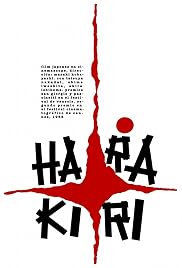
Rashomon (1950) and Harakiri (1962)


I wrote about the great Japanese director Akira Kurosawa just the other day.  And spoke of his philosophy and the impact his films had on me.  However, beyond just his impact on me, his films were incredibly influential for the world of film as a whole.  George Lucas and Francis Ford Coppola were inspired by him and used elements of his films in some of their own and Sergio Leone outright stole the story of A Fistful of Dollars from Kurosawa’s Yojimbo.  Some influences are a little more subtle, like how Masaki Kobayashi, another Japanese director and friend of Kurosawa, borrowed from the story structure of Rashomon in his masterpiece Harakiri.

The stories are very different and the structure is used for a very different effect, but both films involve people sitting around telling stories that a form a larger story.  In Rashomon, it is used to show the perspectives of the different people involved in a crime.  In Harakiri, we are given small pieces of a story that gradually builds the tension of the situation in which the storytellers find themselves.

Rashomon is the film responsible for opening up the impressive Japanese film industry to the rest of the world.  The studio that made it did so entirely because of Kurosawa’s reputation, as the script confused them and they didn’t think it would make any money.  In Japan, it wasn’t that successful, but a representative of the Venice Film Festival saw the film and convinced the studio to submit it.  It went on to win the top prize of the Golden Lion and the critics choice award there.  From there it spread quickly around the world winning awards all over the place and even picked up an Oscar Nomination for best Art Direction.

The film opens on three men taking shelter from a torrential downpour at the famed Rashomon gate.  A woodcutter and a priest sit staring off into space trying to comprehend exactly what just happened.  They were both witnesses at a trial of a famed bandit who was accused of killing a samurai and raping his wife.  They both tell their stories and then explain the stories of the bandit, the woman, and even of the dead man who communicates through a medium.  All the stories are vastly different and between each telling of the story, the three men discuss which might be the truth.  This concept of multiple tellings of the same story being very different probably sounds very familiar, but rest assured this is what inspired all those copycats, in fact, the Rashomon effect is a real thing, look it up.

Harakiri has a slightly more traditional narrative, as the stories being told start to form a whole narrative.  This is a great example of a nonlinear storyline that would become popular much later.  The film is set a few years into a time of peace in Japan.  The clans are no longer warring and the demand for Samurai is greatly decreased.  Samurai were of too high a class to take jobs as laborers which left many without anyway to survive.  The story of a samurai going to a clan lord asking for an honorable place to commit ritual suicide (Harakiri) instead of living in poverty and disgrace spread across Japan.  In the story the great Lord was so impressed by his determination and conviction that he offered the Samurai a job within his clan.

Other Samurai followed suit only to be turned away with some money in their pockets.  The disgraceful act of feigning a desire to commit Harakiri only to get money was greatly looked down on by the great Lords.  Our story begins with a grizzled Samurai making just such a request.  He is cautioned with a story of a young Samurai making the same request and being forced to follow through with the ritual suicide.  Through further stories we learn of an existing relationship between the young samurai from before and the older one here in the present.  What follows is a tense story about the foolishness of a legalistic honor code and what that meant for all the out of work Samurai out in the world.

Rashomon can only be called a bit of an experiment with storytelling, in that it tells the same story in different ways.  There are so many techniques used that seem different and a bit off-putting.  Like when we see the trial, testimonies are given right to the camera with no shot of the judge at all.  Or in the woods when they are discussing the crime itself he’d mix in shots with the camera pointed directly at the sun.  One thing he did in the woods was try to make the scene feel like classic silent films and he succeeded both in the look and the score that played over the scenes.  This is not a film for everyone, but it’s importance in cinema history cannot be ignored and if you are at all curious about the history of film it’s definitely worth seeking out, or if you just like the idea of this kind of storytelling.

Harakiri on the other hand is a much more traditional storyline, that can be enjoyed by anyone willing to give subtitles a chance.  This film is what I like to call a slow burn.  The tension builds slowly and deliberately, but the story is so fascinating and it leaves you with just enough questions that you are fully involved throughout.  The acting is excellent and the themes are clear.  I’d consider this a fantastic introduction to the world of Japanese cinema.  

Rashomon 9/10
Harakiri 10/10

Wednesday, November 16, 2016

My Philosophy on Film


Akira Kurosawa, was the Japanese director, who opened the door on Japanese cinema to the rest of the world.  Before his films received critical acclaim worldwide, one of the greatest film industries in the world was widely unknown to the outside world.  He inspired numerous films and filmmakers, and it’s safe to say that movies would not be the same without his influence.  He also happens to be one of my favorite filmmakers, largely because his philosophy of what films can and should be so closely matches my own.  So when I decided I wanted to give my audience (small as it may be) an idea of what I look for in a film, I thought I’d take the opportunity to use Kurosawa and his films as an example.

One of this great director’s defining characteristics is his focus on the script.  Like myself he sees the script as the most important part, “With a good script a good director can produce a masterpiece; with the same script a mediocre director can make a passable film. But with a bad script even a good director can’t possibly make a good film.”  I think for Kurosawa this idea spawns from his absolute love of literature.  From an early age he was absorbing literature of all sorts, and it certainly shaped his career.

He was constantly inspired by existing literature in the scripts that he wrote.  In films like Throne of Blood and Ran, he took Shakespeare and adapted it to Japanese culture.  While both are clear adaptations of Macbeth and King Lear respectively, he instructed his actors to model their facial expressions after the masks of Japanese Noh theater.  And he set the films in the world of Samurai.  What results is a completely unique interpretation of Shakespeare that somehow enhances your understanding of the classic plays.  

At this point I’m just going to post some Kurosawa quotes as they match so perfectly with what I think makes for good writing.

“In order to write scripts, you must first study the great novels and dramas of the world. You must consider why they are great. Where does the emotion come from that you feel as you read them? What degree of passion did the author have to have, what level of meticulousness did he have to command, in order to portray the characters and events as he did? You must read thoroughly, to the point where you can grasp all these things. You must also see the great films. You must read the great screenplays and study the film theories of the great directors. If your goal is to become a film director, you must master screenwriting.”

“I‘ve forgotten who it was that said creation is memory. My own experiences and the various things I have read remain in my memory and become the basis upon which I create something new. I couldn’t do it out of nothing. For this reason, since the time I was a young man I have always kept a notebook handy when I read a book. I write down my reactions and what particularly moves me. I have stacks and stacks of these college notebooks, and when I go off to write a script, these are what I read. Somewhere they always provide me with a point of breakthrough. Even for single lines of dialogue I have taken hints from these notebooks. So what I want to say is, don’t read books while lying down in bed.”

His goal was honesty in his characters and he put hours of work into developing the characters beyond anything he might need for the film just so that they would be more honest.  He learned that collaboration with other writers was another great way to create an honest character because it allowed him to separate his personal feelings for the characters from the direction that character would really act or react.  These methods were on full display when he and three other writers spent a month in seclusion at a hot spring resort writing the script for Seven Samurai.  They came away with an enormous script and Kurosawa personally had 6 notebooks of information just on the characters.  He then insisted that the actors playing the farmers live and work as the families they were supposed to be in the film.

His dedication to honesty in his characters and his stories is a defining feature of his career and one that I think makes for excellent cinema and excellent writing in general.  There was a devastating earthquake in Japan when he was just 13 and his older brother took him to see the devastation.  Young Akira wanted to look away from the devastation as it was graphic and brutal, but his brother wouldn’t allow it.  It clearly had an impact as he later said, “Being an artist means not having to avert one’s eyes.”  To me, this honesty and open-mindedness is essential in filmmaking.  You have to be open to any and all ideas, because you may have to write a character where an idea you find offensive or uncomfortable is a key element in who they are and what they do.

I have a Kurosawa quote on the top of my blog as to me it perfectly encapsulates my overall feelings about film.  This is the longer version of that quote, “For me, filmmaking combines everything. That’s the reason I’ve made cinema my life’s work. In films, painting and literature, theatre and music come together. But a film is still a film.”  No filmmaker more encapsulates this idea than Kurosawa.  He was trained as an artist and studied literature at a young age.  He applied for a job at a film studio on a whim, but rose quickly through the ranks due to his understanding of so many of the art forms that make up the medium of film.

Kurosawa was a perfectionist and often went over budget and well past the scheduled shooting time in order to perfect his films.  This caused difficulty with Japanese studios that had to start cutting costs and Kurosawa was forced to seek out funding in other places.  He went long periods of time without making films and at one point thought he had made his last film.  So instead he decided to paint the images of the film that he had in his head.  The series of paintings that he made were eventually used as frames of a storyboard for his 1980 film Kagemusha.  The visuals of the film are incredible and if you see his paintings you can understand why.

His experience with literature helps him craft excellent stories and characters.  His experience in art helps him create beautiful images on screen.  Much of his work was in black and what, but he still developed dynamic images through the staging of the shot and how it’s framed.  A popular trend now is 3D in film, which essentially accentuates the depth of field that films naturally have.  Kurosawa like many other great directors constantly found a way to add incredible depth to each and every shot.  It’s my firm belief that each shot of a film should be considered it’s own work of art and Kurosawa is one of those filmmakers that really makes you feel like that is true.  His dynamic editing and filming methods only add to the artistry and are unique elements to the medium of film.  It’s clear this man brought an artistic and literary eye to each and everyone of his films and you can really see that influence.  There’s a lot more I can probably say about his work, but I think I’ll just leave with a series of his paintings that were used to create the images in his film Kagemusha.